Furnace Flame Sensor Cleaning and Replacement Boise ID
Furnace Flame Sensor Cleaning and Replacement Boise ID helps restore dependable heat when your furnace lights briefly, shuts down, or repeatedly retries ignition. We inspect the sensor and ignition sequence, clean a reusable flame sensor or replace one that has failed, then verify burner operation. If you are dealing with furnace short cycling or a cold house in Boise, our flame sensor service Boise starts with the fault your system is showing.
Check Before CleaningInspect sensor condition and placement
Protect ComponentsKeep surrounding parts clear
Test Flame SignalObserve control response during ignition
Explain FindingsReview the repair and next steps
What Sensor Service Covers
A flame sensor visit covers inspection of the sensor, its connection, and the furnace ignition sequence, followed by cleaning or replacement when testing supports it. We also verify flame recognition after reassembly. Separate faults, such as a failed ignitor, damaged control board, or restricted airflow, require additional diagnosis and repair; we explain those findings rather than treating them as part of a sensor cleaning.
Sensor Condition Check
We inspect the rod for deposits, cracks, wear, and correct placement in the burner flame. The connection and visible wiring are checked as well, because a sound sensor cannot send a reliable signal through a loose or damaged connection.
Appropriate Cleaning
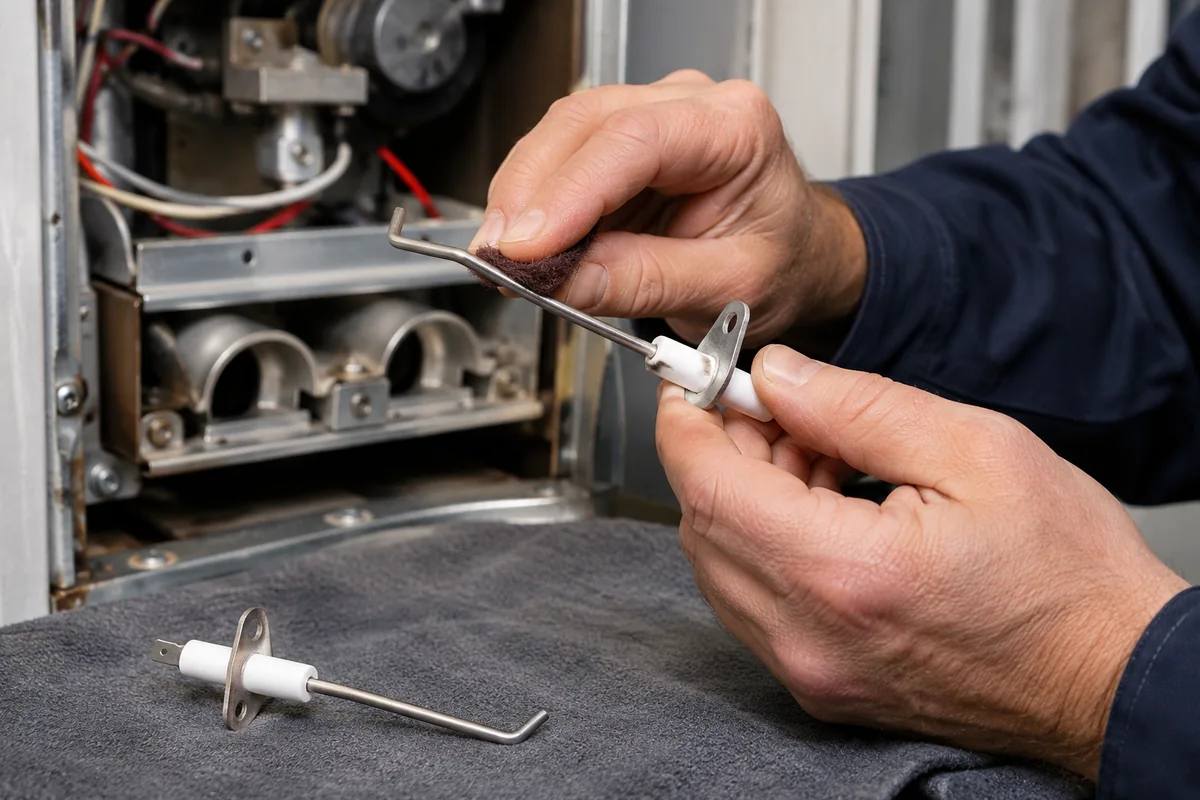
When the sensor is intact and contamination is the likely cause, we clean it using a method suited to the component. We avoid aggressive abrasion that can damage the sensing surface, then reinstall the part in its correct position.
Model-Matched Replacement
If the sensor is physically damaged or fails testing, we identify a compatible replacement for the furnace. Proper fit and positioning matter: an incorrectly installed rod may not sit in the flame where the control can reliably detect it.
Startup Verification
After service, we run the ignition sequence and confirm the control recognizes flame and keeps the burner operating. We also check that the furnace responds to the thermostat call and does not immediately repeat the original shutdown.
Findings Walkthrough
We explain whether cleaning or replacement was performed and what the test showed. If another component contributed to the shutdown, we identify it separately and describe the next diagnostic step in plain terms.
Homes and businesses.
The approach is the same for a home and a business. What changes is the access, the schedule and who needs the paperwork.
For Homes
We check how your furnace behaves during a thermostat call and explain whether the sensor needs cleaning or replacement. You can show us the shutdown pattern.
Burner lights, then stops
Repeated ignition attempts
Cold air between heating cycles
For Properties
We trace the furnace complaint and share clear findings with owners or property managers. We verify the heating sequence after sensor work and note any separate fault.
Tenant reports intermittent heat
Repeated control lockouts
Furnace serves several occupied rooms
Furnace Flame Sensor Cleaning and Replacement Boise ID
A plain-language look at what Furnace Flame Sensor Cleaning and Replacement involves and when it is needed.
Furnace Flame Sensor Cleaning and Replacement Boise ID is furnace ignition service that cleans or replaces the flame-proving component when a burner lights but the control does not confirm a stable flame. The sensor carries a small electrical signal back to the control board; contamination, a damaged rod, poor grounding, or wiring faults can interrupt that signal. We check the burner sequence, inspect the flame sensor and connections, then clean or replace the part only when test results support that repair. A proper repair includes a startup test, not just wiping the sensor.
Boise winters put a failing furnace on the clock, especially when overnight temperatures push heating systems through repeated starts. A furnace shuts off because of a dirty flame sensor Boise homeowners often notice as a brief flame, a clicking retry, and cool air from the registers. Our furnace flame sensor cleaning Boise visit distinguishes sensor contamination from an ignitor problem, faulty thermostat, restricted airflow, or a pressure switch failure. We serve homes across Ada County and explain what the furnace is doing before work proceeds.
The sensor must prove burner flame to the control before the furnace continues its heating cycle.
What It Is
Inspection, cleaning, or replacement of the furnace component that confirms burner flame to the control.
When Needed
A burner lights and quickly shuts down, or the furnace retries ignition and enters lockout.
What to Expect
We inspect the sensor, test the ignition sequence, complete supported repairs, and verify operation.
What to Expect During Service
Furnace Flame Sensor Cleaning and Replacement Boise ID follows a measured sequence: identify the symptom, inspect the ignition system, make the appropriate repair, and verify operation. Most straightforward visits take about 45 to 90 minutes; added faults require more diagnostic time.
Review Symptoms
We start by asking when the furnace shuts down, whether it lights before stopping, and what the thermostat or control indicator shows. You can point out recent filter changes, unusual sounds, and rooms that are not warming. This first conversation takes about 5 to 10 minutes and helps us reproduce the complaint safely.
Symptom review
Thermostat call
Fault indicator
Inspect Ignition
We open the service area, inspect the burner assembly, wiring, sensor position, and visible deposits, then check the control sequence. An inspection mirror and digital multimeter help us look for a damaged rod, loose connection, poor ground, or a separate ignition fault. We protect the work area and keep the furnace shut down while accessing components.
Sensor position
Wiring check
Ignition sequence
Clean or Replace
If the sensor is intact and deposits are the cause, we clean its sensing surface using an appropriate non-damaging method and reinstall it in the correct position. If the rod is cracked, badly worn, or electrically unreliable, we match a replacement to the furnace. We do not sand or handle a sensor in a way that changes its surface.
Clean sensor
Fit replacement
Reassemble
Check the Signal
After reassembly, we run the furnace through ignition and measure whether the control recognizes flame consistently. A digital multimeter helps assess the flame-rectification signal, while visual checks confirm stable burner carryover. If readings point to a control board, grounding, or burner issue, we explain that finding before expanding the repair.
Signal test
Burner check
Control response
Verify Heating
We complete a call for heat, observe the burner and blower sequence, and confirm the furnace reaches normal operation without an immediate shutdown. The final walkthrough covers the part cleaned or replaced, the observed fault, and any next maintenance step. You get a clear explanation before we leave the equipment operating.
Heat cycle
Explain findings
Next steps
Tools and Test Methods
Move across a circle, or focus it and press Enter, for an illustrative thermal view of the photograph.
Digital multimeter
We use it to check electrical continuity, connections, and flame-signal behavior as the furnace runs through ignition.
Inspection mirror
It helps us view sensor position, burner surfaces, and connections where direct line of sight is limited.
Combustion analyzer
When symptoms call for combustion checks, readings help assess burner operation and combustion conditions after the ignition fault is addressed.
Infrared thermometer
We use temperature checks to compare furnace operation and identify signs that airflow or heat transfer needs further attention.
Static pressure gauge
It helps assess airflow restrictions when a furnace shutdown may involve a clogged filter or system pressure rather than flame sensing.
Thermal views are illustrative, generated from the photographs.
Methods
Ignition sequence tracing
We follow the control's call for heat from inducer operation to ignition, burner flame, flame proving, and blower response. This reveals where the sequence stops and helps distinguish a sensor problem from failed ignition or another safety interruption.
Flame-signal testing
We check whether the control receives a stable signal after the burner lights and inspect sensor placement, wiring, and grounding. A dirty sensor is cleaned only when the rod remains serviceable; a failed component is replaced with a compatible part.
Post-repair heat-cycle check
We run the furnace through a complete heating call after reassembly, observing burner stability, control response, and blower timing. If the original shutdown recurs, we continue diagnosis rather than declaring a successful repair after a single ignition.
When to Call for Sensor Service
Repeated ignition
Your North End furnace lights for a few seconds, shuts down, then repeats the ignition sequence.
We inspect the flame sensor and the complete ignition path, including the burner flame, wiring, and control response. If contamination is preventing flame recognition, we clean the sensor; if it is worn or damaged, we recommend a matching replacement. We test the furnace after the repair rather than relying on a reset.
Outcome: You get a clear cause for the repeated starts and a verified heating cycle, with any separate ignition fault identified.
Cold-night lockout
A Boise Bench home loses heat overnight and the furnace enters lockout after several starts.
We check the fault indication, sensor condition, grounding, and ignition components to identify why the control is not keeping the burner on. We address the sensor only if it is responsible, then confirm the furnace can restart and complete a normal call for heat.
Outcome: The repair targets the failed step in the ignition sequence, helping restore heat without repeated manual resets.
Cold-air report
A property manager in Harris Ranch receives a tenant report of furnace blowing cold air between heating attempts.
We compare burner operation with blower timing and thermostat demand, then inspect the sensor and relevant safety controls. If the burner drops out from a weak flame signal, we clean or replace the sensor and document the observed result for the property manager.
Outcome: You receive a specific diagnosis to share with the tenant and a furnace tested through its heating sequence.
Seasonal startup
A furnace works intermittently after summer shutdown and fails when Boise heating demand rises in November.
We inspect the sensor for deposits and check wiring and burner alignment before running the furnace. If cleaning restores a stable signal, we confirm that with repeated starts. If the sensor has failed, we fit a compatible part and verify the control recognizes flame.
Outcome: The system is checked under an actual call for heat, so the intermittent ignition complaint is addressed before colder nights.
North EndBoise BenchHarris Ranch
How Flame Sensor Service Works in Boise
Boise's cold season begins in November, when a furnace that has sat idle through warmer months can reveal a weak sensor on its first sustained heating calls. We service homes throughout Ada County, including older properties in the North End and Boise Bench as well as newer construction around Harris Ranch. Equipment age, service access, and furnace model all affect how we inspect and match a replacement.
Our flame sensor service Boise visit starts by reproducing the symptom and checking the complete ignition sequence, not just the sensor surface. When a furnace shuts off after lighting, we also consider a dirty filter, poor grounding, burner condition, and safety controls. For furnace sensor cleaning and repair Boise residents can expect a functional test after any cleaning or replacement.
We work to the equipment manufacturer's installation requirements and applicable local mechanical and fuel-gas codes; we do not bypass safety devices. Boise's seasonal temperature swings make early diagnosis useful: repeated retries can turn a brief intermittent symptom into a no-heat call during a colder night.
North End: Older homes can have compact furnace closets and equipment of different ages, so we identify the model and safe access points before removing the sensor.
Boise Bench: A mix of established homes and updated heating systems calls for checking the installed control sequence rather than assuming every furnace uses the same sensor.
Harris Ranch: Newer systems still need correct sensor placement and clean electrical connections; we verify both when a furnace reports intermittent flame detection.
Downtown Boise: Tight utility spaces can limit access around the burner assembly, making careful inspection and component handling important during cleaning or replacement.
Cold November nights increase the number of furnace heating cycles: A weak flame signal may become obvious when the furnace runs more often after a mild season. We test the system under a call for heat and look for repeated retries rather than judging the repair from a static inspection.
Older equipment may have worn connections or limited service access: A sensor fault can overlap with aged wiring, burner deposits, or an older control. We inspect the surrounding components and explain when a repair needs diagnosis beyond cleaning the sensor itself.
We review the symptom and identify the furnace model and access points.
We protect the work area and inspect the sensor and ignition components.
We test the heating sequence, explain findings, and review next steps.
From problem to finished result.
IllustrativeThe thermal view is generated from the photograph. It is not a measurement. Drag the handle, or use the arrow keys once it is focused.
Repeated Ignition to Steady Heat
Before: A North End homeowner reported that the furnace lit for several seconds, shut off, and tried again. The thermostat was calling for heat, but rooms stayed cool and the control indicated repeated ignition attempts. The visible sensor had deposits, though wiring and flame position still needed checking before selecting a repair.
After: We cleaned the intact sensor, checked its connection, and ran the furnace through three heating starts. The burner stayed lit for each test cycle, and the control continued the heating sequence without an immediate shutdown. The homeowner received an explanation of the fault and the steps completed.
Check the furnace filter monthly during heavy heating use and replace it when loaded or at the manufacturer's interval. Keep the service area clear so airflow and future inspection are not obstructed.
Damaged Sensor Replaced
Before: A Boise Bench furnace shut down shortly after ignition even after the homeowner reset the control. Inspection found a physically worn sensor and an unstable flame signal. Cleaning would not correct the damaged component, so the ignition sequence needed a compatible replacement and a full operational check.
After: We installed a model-compatible flame sensor and verified its position, connection, and signal during startup. The furnace completed a 15-minute heating run without the original burner dropout. We also checked that the control responded normally to the thermostat call and explained the failed part.
Do not repeatedly reset a furnace that returns to lockout. Record the indicator pattern and call for diagnosis; repeated retries do not repair a worn sensor or a separate ignition fault.
Sensor Fault Separated From Airflow
Before: A Harris Ranch resident thought a dirty flame sensor was causing the furnace to stop. The burner remained lit during initial checks, but the system later shut down as the cabinet warmed. A clogged filter and restricted airflow were possible, so sensor cleaning alone would not have resolved the complaint.
After: We inspected the sensor and verified flame recognition, then checked the filter and airflow symptoms. The sensor did not need replacement; correcting the airflow restriction allowed the furnace to complete its heating sequence. The customer avoided an unnecessary component swap and learned which symptom to monitor.
Use the filter size and replacement interval specified for your furnace, and check it more often during dusty periods. If shutdowns continue after airflow is corrected, arrange another diagnostic check.
Fix Shutdowns From a Dirty Sensor
A furnace that repeatedly lights and stops leaves rooms cold and places extra starts on the ignition system. We trace the shutdown to its cause, then clean or replace the flame sensor when the evidence points there. If testing shows a separate fault, we identify that instead of masking it.
Brief burner flameBurner lights briefly, then shuts down before heatingThe control may stop the burner because flame confirmation is missing, leaving the home cold and prompting repeated ignition attempts. We inspect the flame sensor, burner position, connection, and grounding, then test the flame signal during startup. If deposits are interrupting detection, we clean the sensor and verify continued burner operation. If the sensor is damaged or another fault is present, we explain the specific repair required.
Short cyclingFurnace short cycling despite a thermostat callRepeated starts interrupt heating and can leave temperatures uneven, particularly in Boise homes during overnight cold weather. We observe the full sequence instead of assuming the flame sensor is responsible. A dirty sensor is one possibility; restricted airflow, a clogged air filter, a faulty thermostat, or a limit switch can also stop a cycle. We test the relevant components and address the verified cause.
Ignition lockoutRepeated lockouts after failed ignition attemptsA furnace in lockout may stop producing heat until its control resets, and repeated resets do not correct the underlying fault. We check the ignition history and examine the ignitor, sensor, burner flame, wiring, and control response. After correcting a sensor problem, we confirm the furnace can complete its heating call. We also explain any separate issue that would otherwise trigger another lockout.
Cold airFurnace blows cold air after burner stopsThe blower can continue moving air after a burner shutdown, making the home feel colder while the furnace retries or enters a safety delay. We determine whether the burner is dropping out because flame is not being proved or because a different safety control intervened. Sensor cleaning or replacement follows only when supported by testing. We then check the blower sequence and verify warm-air operation through a complete call for heat.
Reliable Heat, Verified Operation
A verified flame signal helps your furnace complete its heating cycle.
Fewer Ignition Retries
Cleaning a serviceable sensor or replacing a failed one can stop repeated ignition attempts caused by a weak flame signal. We watch the furnace complete several starts and confirm that the burner remains lit through the call for heat, rather than relying on one successful ignition.
Clear Fault Diagnosis
A flame sensor fault can resemble an ignitor, grounding, or control-board problem. We test the sequence and electrical signal before recommending parts, so you get furnace sensor cleaning and repair Boise homeowners can connect to a specific finding instead of guesswork.
Safer Burner Shutdown
The control is designed to stop fuel flow when it cannot verify flame. We preserve that safety sequence; we never bypass a sensor to keep a burner running. After service, we confirm flame recognition and check that the furnace responds normally to a thermostat call.
A Practical Next Step
If the sensor is clean and the signal remains unreliable, replacement is more useful than repeated cleaning. We show you the worn or damaged component, explain the repair path, and test operation afterward so you know whether the original shutdown symptom has been resolved.
What you receive
Clear records you can keep and share.
Service Summary
Records the observed complaint and work completed
Test Notes
Lists ignition and heating sequence observations
Part Details
Identifies the sensor cleaned or replaced
Follow-Up Notes
Summarizes any separate fault discussed
Cleaning or Replacement
A sensor is cleaned when its rod is intact and contamination affects flame detection; physical damage calls for replacement.
Cleaning
Removes deposits from a serviceable sensor surface.
Rod remains intact
Signal issue is contamination
Position is checked afterward
Replacement
Fits a compatible sensor when the original is damaged or unreliable.
Match furnace model
Check position in flame
Test control response
Further Diagnosis
Checks other faults when sensor testing does not explain shutdown.
Inspect wiring and ground
Review ignition sequence
Check airflow symptoms
System Components
Flame sensor
Ignitor
Control board
Burner assembly
Pressure switch
Limit switch
Blower motor
Air filter
Service ZIP codes.
A list like this tells people straight away whether you cover their street. Not listed? Call and ask: it only takes a minute.
A furnace that lights briefly, shuts its burner off within seconds, then retries is a common sign of a dirty or failing flame sensor. The same pattern can come from grounding, wiring, burner, or control faults, so the symptom alone does not confirm the part. We inspect the sensor and test the ignition sequence; cleaning is appropriate when the rod is intact and contamination is affecting flame recognition.
Edge heating and cooling system provides flame sensor service Boise homeowners can request for furnace shutdowns, failed ignition, and repeated burner retries. We inspect the sensor, wiring, burner sequence, and control response before cleaning or replacing a component. Service is available across Boise neighborhoods, including North End, Boise Bench, and Harris Ranch. Call (208) 218-0701 to discuss the furnace symptom and arrange a diagnostic visit.
Furnaces needing additional wiring or control troubleshooting can cost more. We identify the cause and explain the price before the repair, so you can distinguish a sensor replacement from a separate ignition-system issue.
Yes, a dirty flame sensor can cause a furnace to shut its burner down shortly after ignition because the control cannot confirm flame. The blower may continue briefly, and the furnace may retry before entering a lockout. We test the sequence rather than assuming every short cycle has the same cause.
If your furnace lights and shuts down, call Edge heating and cooling system at (208) 218-0701. We will ask what the system is doing, inspect the ignition fault, and explain the repair before proceeding. Our technicians focus on tested operation, not a temporary reset.
Tell us what your furnace is doing, your Boise neighborhood, and when the heating problem began. Call (208) 218-0701 to discuss the repair request; our phone team will record the details and route your inquiry to an independent company. Phone response hours vary, so leave a message with your name and callback number if the line is busy. We will use the information to help direct the next step.